How to tell who actually sent you a customer — with no POS integration and no email list
·7 min read
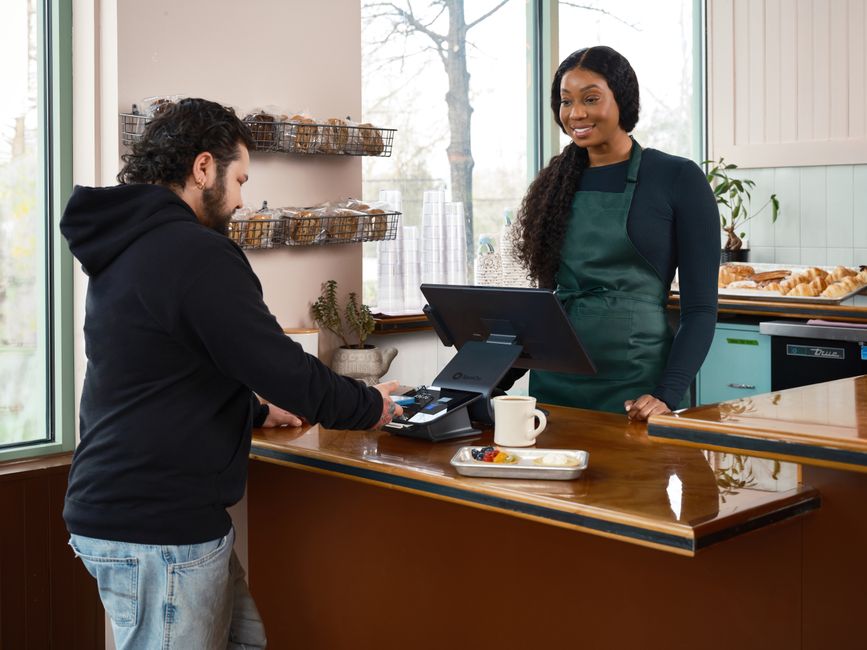
Something worked last month. A creator posted, a regular told a group chat, a discount went round — and the following Tuesday was busier than usual. You almost certainly cannot say which of the three did it, or by how much.
The instrument most owners have is asking at the till, and it fails in a completely predictable way: staff forget when there is a queue, customers say "online", and nobody writes any of it down. By the end of the week you have an impression, not a number.
Why the advice you find doesn't fit your shop
Search for referral tracking and every result assumes the same business: an online store, a point-of-sale system with an API, and a customer list you can email. The instructions open with "install the app on your store" or "connect your POS". If your till is a card terminal and your mailing list is the notebook by the phone, you are not the reader those pages had in mind — and you are most of the businesses on any given street.
What you are actually trying to measure
Not views. Not clicks. Not reach. The only question that pays your rent is how many people walked in because a specific person told them to.
It matters because the two kinds of promoter are indistinguishable until you count arrivals. Someone with a large, scattered audience and a quiet regular with two hundred local friends look identical in every metric an app can show you — right up to the moment you count who came through the door.
A click is not a customer. The only event worth counting happens at your counter, in front of a member of your staff.
The mechanism, in one paragraph
Give each promoter their own link. Someone opens it, claims the discount, and a single-use code lands in their account as a QR. They show it when they arrive, your staff scan it, and that visit is recorded against the link it came from. Nothing is installed and nothing is connected to your till — the thing that does the scanning is a web page on a phone.
- You post an offer for creators, and attach a discount to it.
- Every creator you accept gets their own share link for that discount, minted automatically at the moment you accept them.
- A customer claims through one of those links and receives a single-use code that holds its place for a limited window — 48 hours unless you set otherwise.
- You scan it at the counter. That is the moment the customer becomes countable: not the click, not the claim.
Who does the scanning
An owner-operated café can scan from the owner's own account. A restaurant with four waiters cannot: they have no account, and handing them the owner's password would give every one of them the ability to edit offers, read private messages and delete the business.
So a staff device is a capability rather than an account. You create a named link — "front till", "Sam's phone" — and open it once on that device. From then on it can redeem and do nothing else. You can have up to ten live at a time, each showing when it was last used and how many scans it has done, and revoking one takes effect on the very next scan.
Staff scan whatever the person in front of them is holding. A creator's voucher, a customer's discount code and a sharer's earned reward all arrive at the same form and are told apart by their shape, so nobody behind the counter has to learn a taxonomy. A code that is expired, already used, or from another business gives the same plain refusal — no detail that would help anyone guess at live codes.
One design choice is worth knowing, because it looks like an inconvenience and is actually the whole product: a customer cannot redeem themselves by scanning a code taped to your counter. A photographed sticker would manufacture customers out of nothing, and the number this exists to produce would stop being worth reading. Redemption stays on your side of the counter.
What you get at the end of it
One table per offer: who promoted, how many people claimed, and how many actually came in. It is sorted by the last column, because sorting by claims would rank the promoter whose audience taps above the promoter whose audience travels — and those are rarely the same person.
The gap between the two numbers is the interesting part. Many claims and few arrivals is an audience in the wrong city. Few claims with most of them arriving is somebody whose word people act on, usually with a far smaller following than you would have guessed.
The constraints, stated plainly
- A discount can never be claimed on its own. Whether it rides on an offer you posted or runs by itself (one at a time per business), a code only ever comes through a person's share link — deliberately. The discount is there to measure a person, not to sell a bargain to strangers.
- The customer needs a free account to hold the code. That is real friction and it will cost you some of them. It is also the only reason the code can be single-use, and single-use is what makes it countable.
- It counts the people who used a code. Somebody who saw the post, walked in and paid full price is invisible to it. Read the number as a floor, never as a total.
- It counts arrivals, not spend. Muchsy never sees your prices or your takings, so it can tell you eleven people came and nothing at all about what they were worth.
- The discount is a real cost, so cap it and give it an end date. Both the cap and the date are shown to every customer before they claim — an undisclosed limit is a complaint waiting to happen.
Your regulars can carry a link too
The same discount can offer something to ordinary customers who bring people in — not creators, not anyone with an audience. They take their own link, send it to people who would genuinely go, and receive whatever you named once the number of customers you set have actually been scanned at your counter.
You set both halves. The reward is either something from your own counter or cash, and the terms are frozen onto their link the moment they take it, so nobody can raise the target after watching somebody get close to it. Nothing is ever owed for a click: a reward exists only once real people have been served, and the form shows you the worst case before you publish.
A realistic first month
Post one offer. Attach one discount, with a cap you would be comfortable honouring and an end date a few weeks out. Enrol one device — the till, or your own phone. Then leave it alone and read the table.
What you are looking for after two weeks is not a big number. It is a name next to a number: one person who demonstrably sent you customers. That is the first hard fact anyone has ever handed you about your own word of mouth, and it is the one that tells you who to work with next.
Try it on Muchsy
Post an offer, or find your first collab. Free to join, and the terms are written down.
Keep reading
- You don't have to be an influencer to share a local discount — here's how it actually works
No camera, no followers, nothing to post. Just a link you send to a few people — and something back from the business when one of them actually walks in. Including the part it will never pay you for.
- How to find local influencers for your restaurant, café or salon — without an agency
Follower count is the wrong first question. Here is what actually matters when a business with one location wants content that brings people through the door.